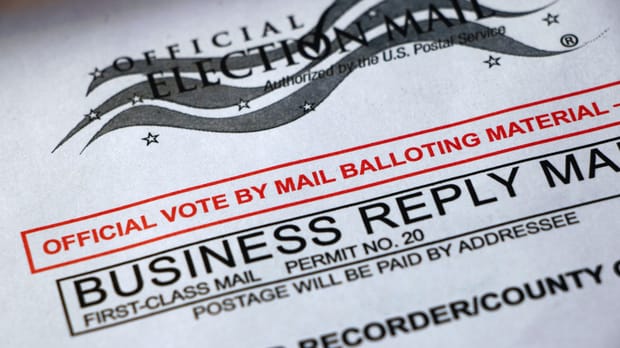
The Republican majority in the Utah Legislature is reviving a plan to kill the state’s universal vote‑by‑mail program. Ballots would still arrive in the mail, but most voters would be forced to return them in person and show valid ID.
Rep. Jefferson Burton, R-Salem, introduced HB479 on Wednesday morning, requiring counties to mail every voter a ballot while ending mail return for most voters. Instead, voters would have to take their ballot to a polling place or a staffed drop box and show valid ID to have it accepted.
The proposal is a retread of an idea Burton proposed last year in HB300. That was stripped out last year after public pushback; HB479 brings it back with stricter ID rules.
The new version tightens voter-ID standards. Photo IDs are prioritized, and become the default. Non‑photo tribal IDs remain a fallback option. Using documents for “proof of residency,” like utility bills or paychecks, is allowed as a fallback method, but that option sunsets in 2029.
Under HB479, returning a ballot by mail flips from the norm to the exception. Voters who still want to mail their ballot would have to apply in person at the county clerk’s office, show ID, and—if approved—renew that permission after roughly two years. Military voters, voters living overseas, and some disabled or hospitalized voters are exempted and can continue to mail ballots under looser rules.
HB479 also sets a floor for drop boxes based on the number of active voters.
- Fewer than 10,000 active voters: at least one box.
- 10,000 or more: at least two, plus one more for each additional 10,000 active voters.
Each drop box must be staffed by at least two poll workers from 8 a.m. to 8 p.m. on each of the five business days before—and on—Election Day. Voters can’t place their own envelopes in the box; poll workers do it after checking the voter’s name against the official register and verifying ID. Every voter has to show up in person. No more dropping off ballots for your spouse or anyone else.
HB479 also introduces changes to campaign financial disclosures, requiring that the Lt. Governor’s office redact the address and phone number of the candidate or responsible party before they are posted on the state’s disclosure website.