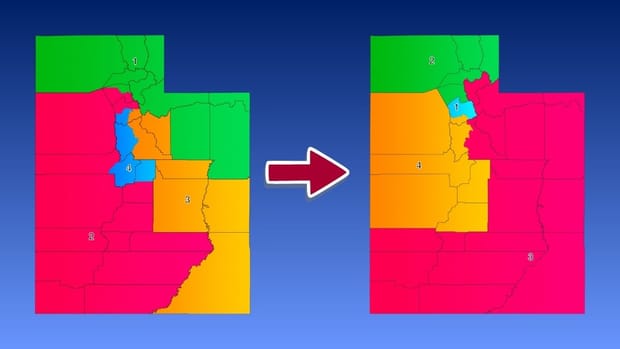
Utah’s new court-ordered map scrambled the political equation for Utah’s Republican incumbents in Congress. More than 2.1 million Utahns are now “orphaned voters”—meaning their November ballots won’t include their 2024 Congressional incumbent.
⏰ Tick Tock
11 days - Deadline for Republican and Democratic candidates for Congress to submit signatures to qualify for the primary ballot (4/10/2026)
12 days - Utah Forward Party nominating convention (4/11/2026)
26 days - Utah State Republican and Democratic State Party nominating conventions (4/25/2026)
85 days - Utah's 2026 primary election (6/23/2026)
218 days - 2026 midterm elections (11/3/2026)
953 days - 2028 presidential election (11/7/2028)
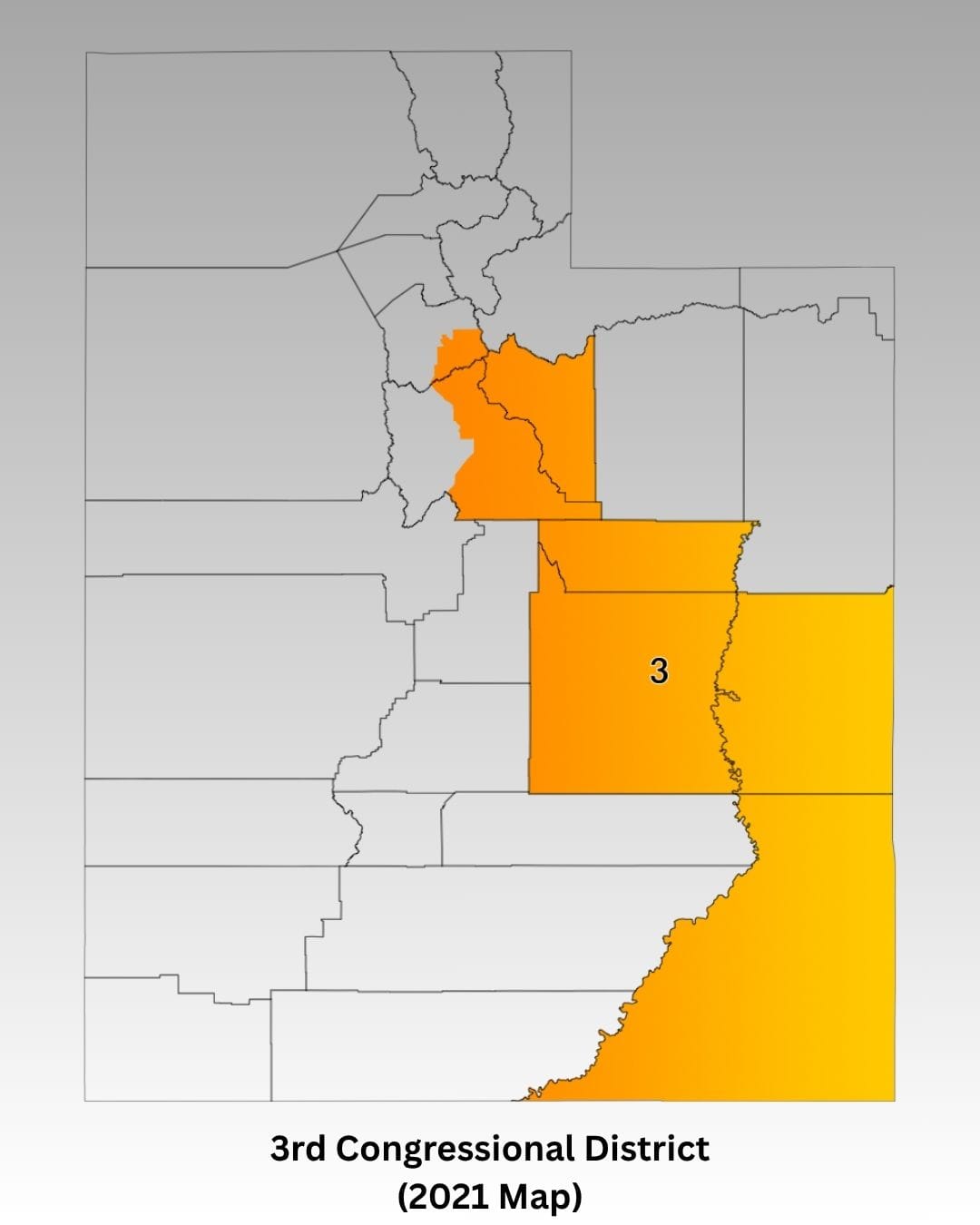
Nowhere is this more obvious—or politically dangerous—than in the new 3rd District, where GOP Rep. Celeste Maloy is trying to win a second full term in Congress.
Our analysis shows Maloy, nominally an incumbent, retains only 40% of the electorate from her previous district. Her base was anchored in rural southern and western Utah, where she spent years working with those voters, first as a staffer for former Rep. Chris Stewart, then winning the special election to replace him when he stepped down in 2023. That district barely changed between 2011 and 2021; the new map blows that stability up.
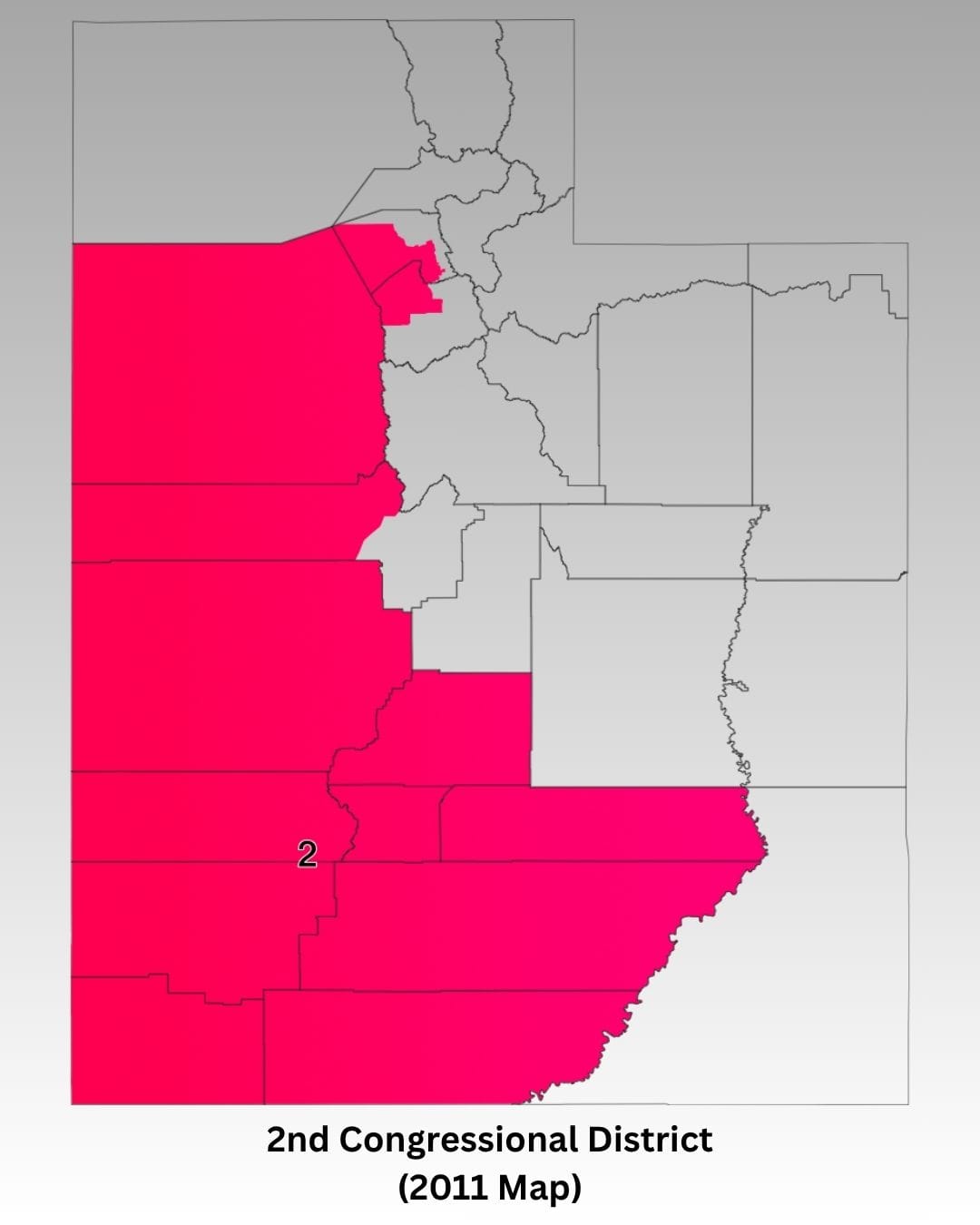
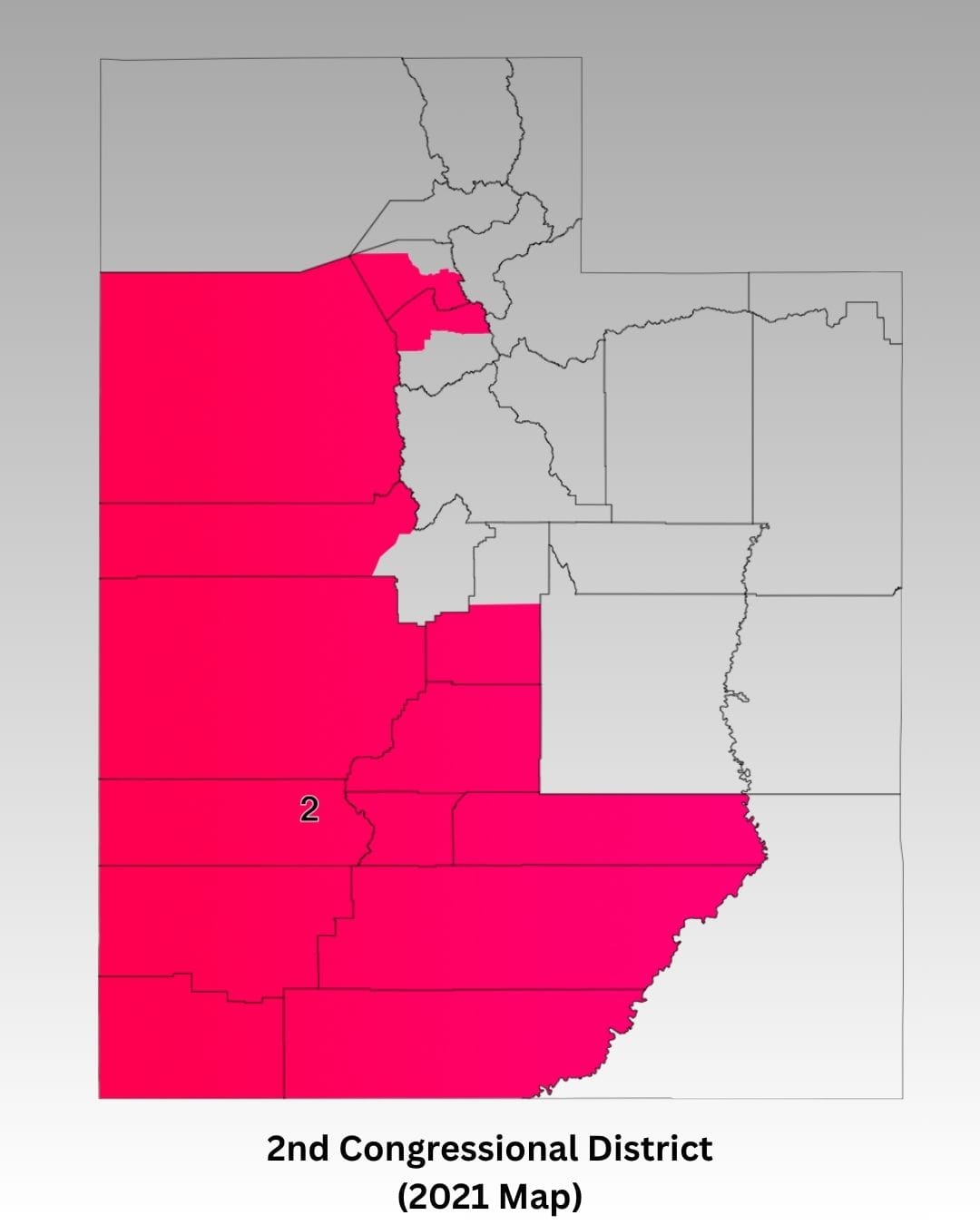
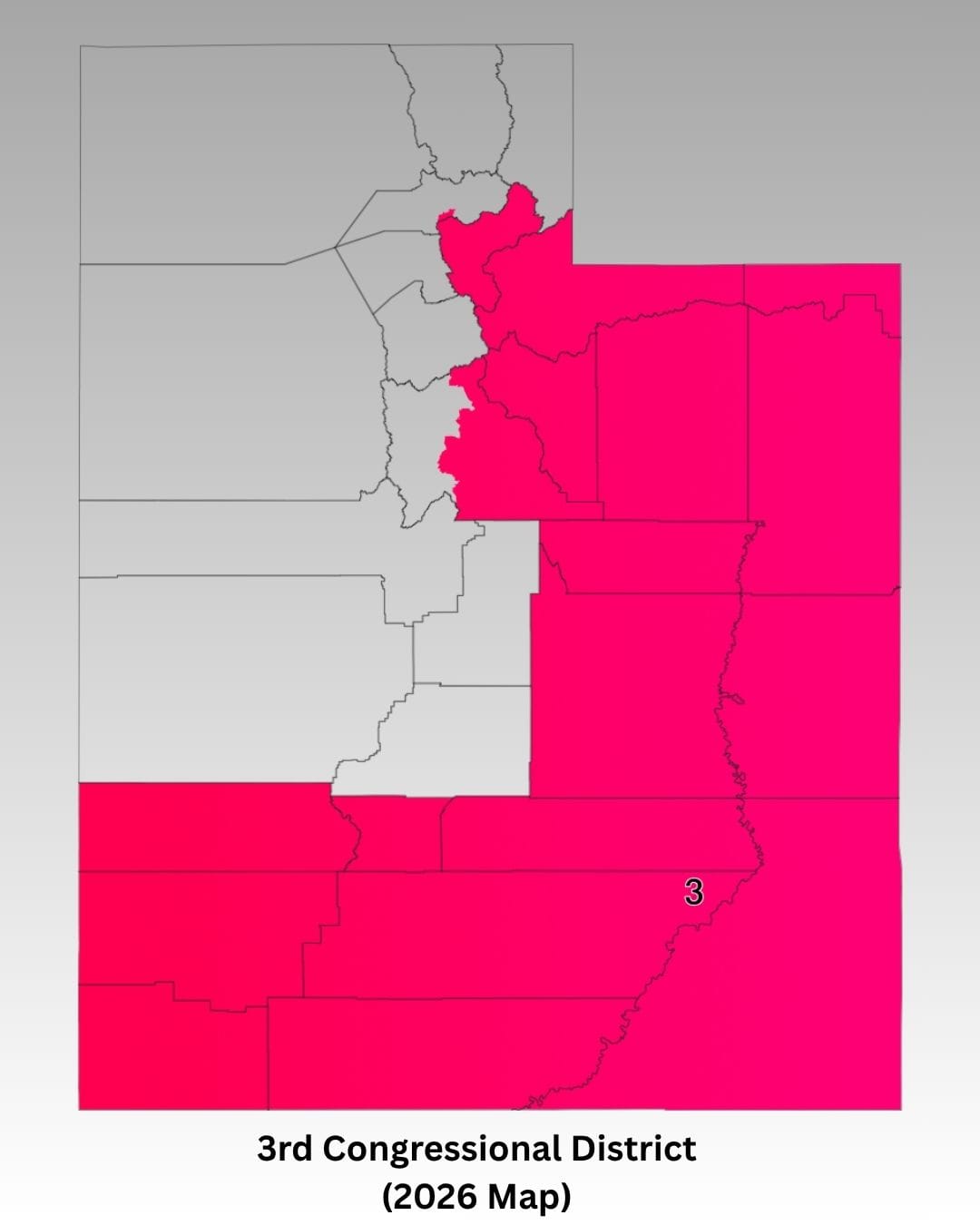
The new CD3 sheds big chunks of Western Utah and stretches into the Uintah Basin and Utah County’s Silicon Slopes—voters who’ve been represented by John Curtis and Mike Kennedy. Nearly 600,000 of Maloy’s likely 2026 voters haven’t seen her on a general election ballot, which means she’ll be forced to spend significant resources on introducing herself.
First, she has to survive the GOP primary. Former state Rep. Phil Lyman is a real threat in CD3, and the new lines don’t do Maloy any favors. In the 2024 GOP governor’s primary, Lyman beat incumbent Spencer Cox in several counties that now sit inside CD3.
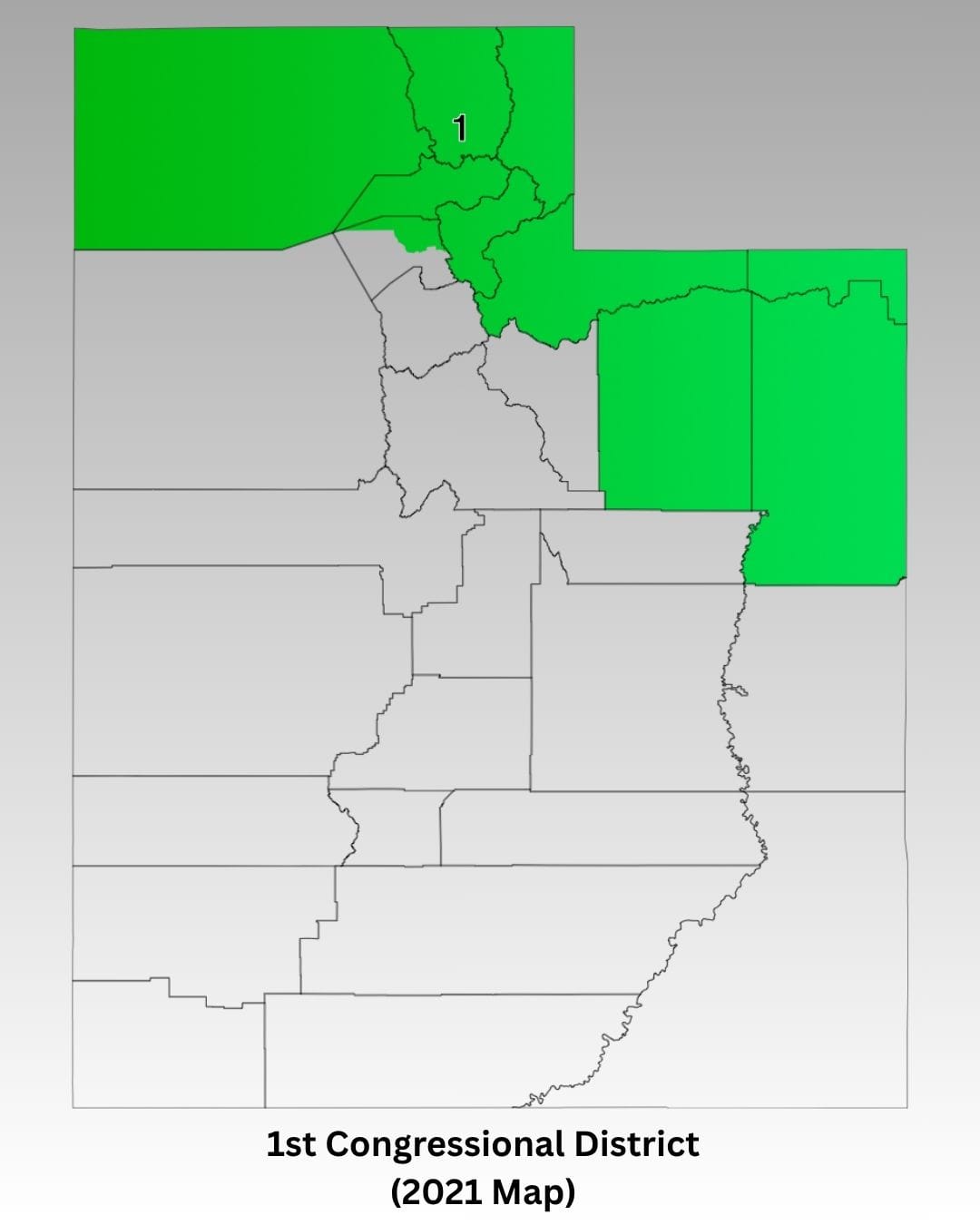
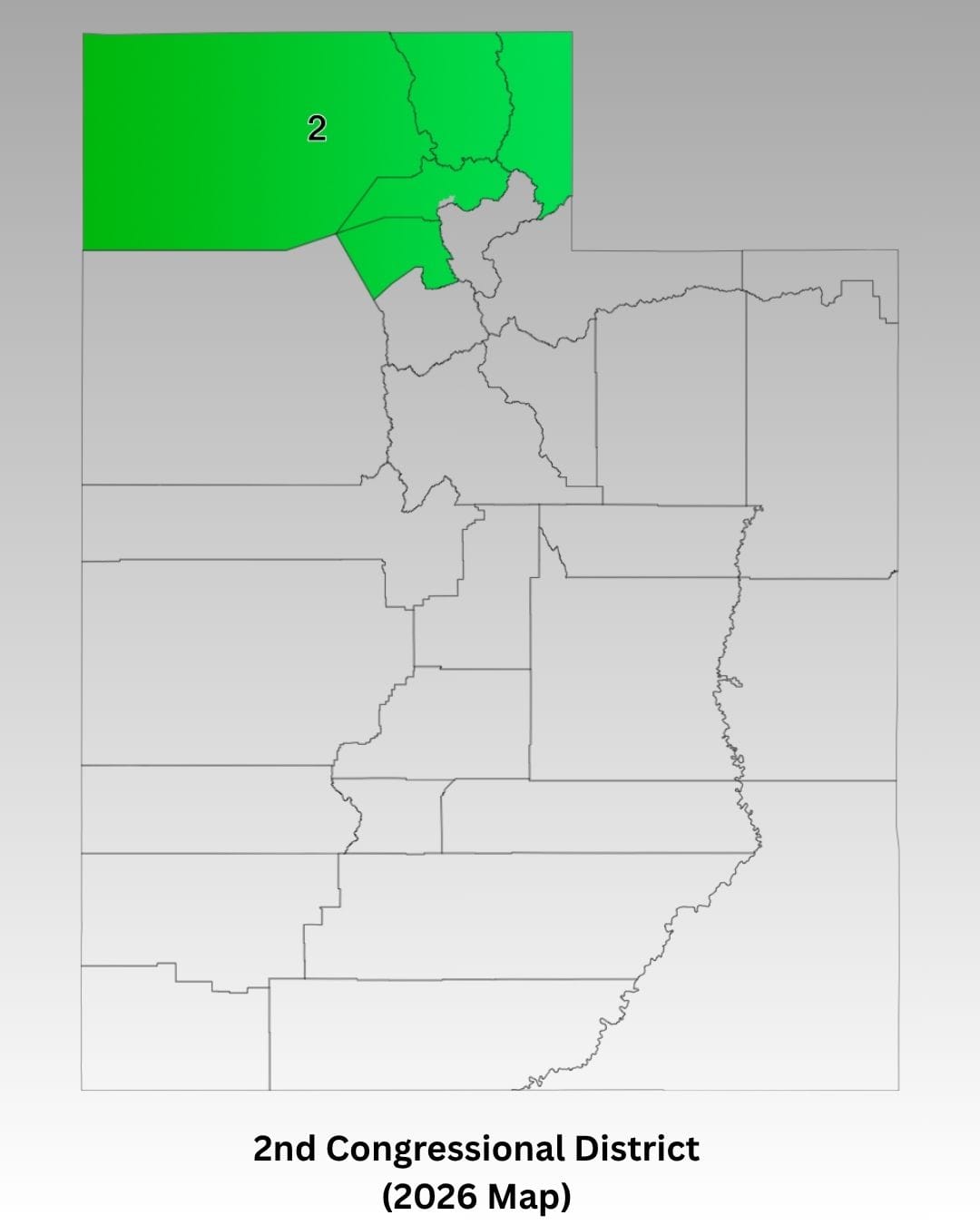
Rep. Blake Moore, now in the redrawn 2nd District in northern Utah, migrates a massive chunk of his former voters from Weber and Davis Counties into the new district. More than 70% of voters from his old district land inside the new boundaries.
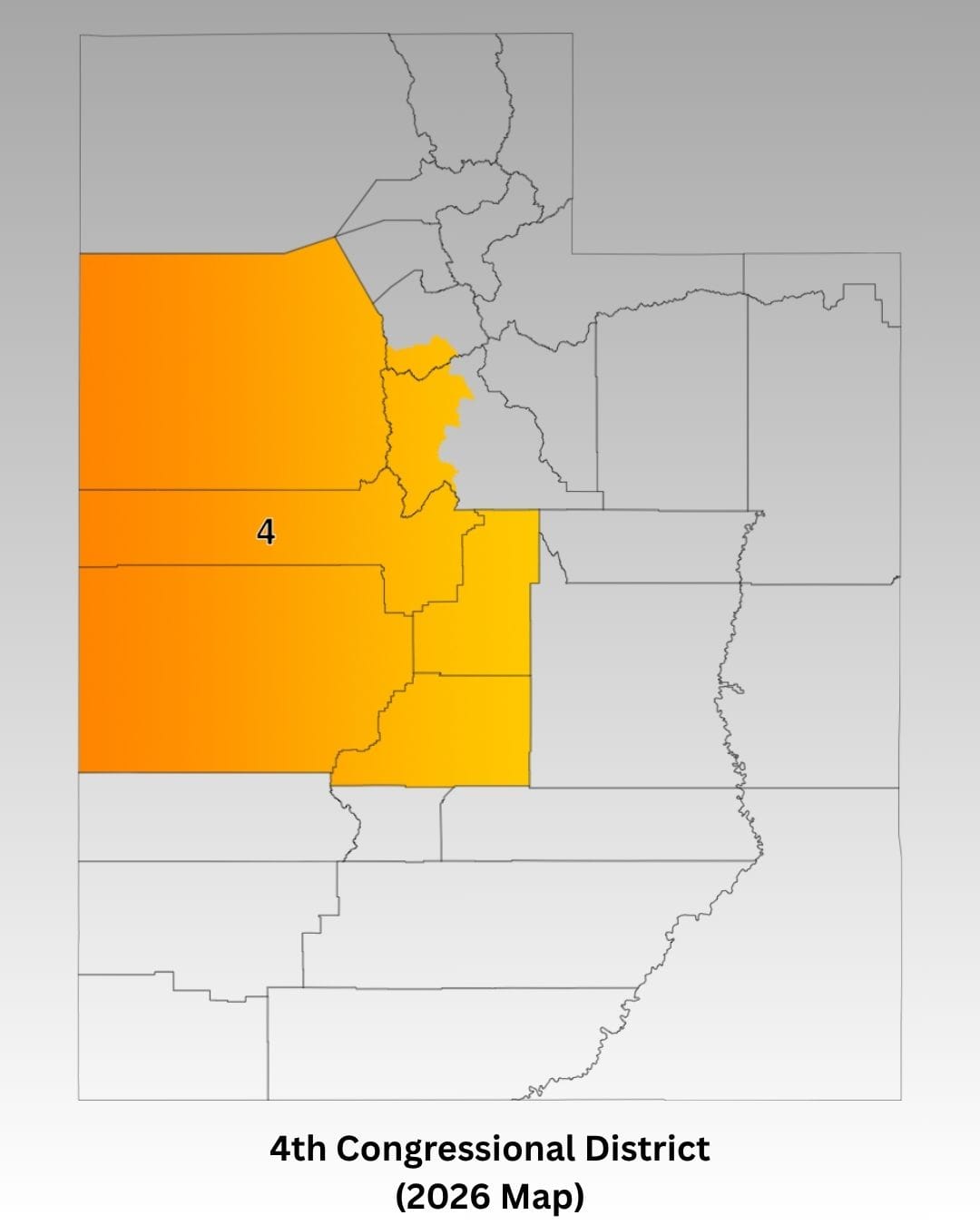
Rep. Mike Kennedy, now running in the new 4th District, faces a problem similar to Maloy’s: only about 40% of his previous constituents — mostly in Utah and Salt Lake counties — followed him into the seat, leaving a majority of voters who haven’t seen him on a general-election ballot. He faces five Republican primary opponents, but none has Phil Lyman’s name recognition.
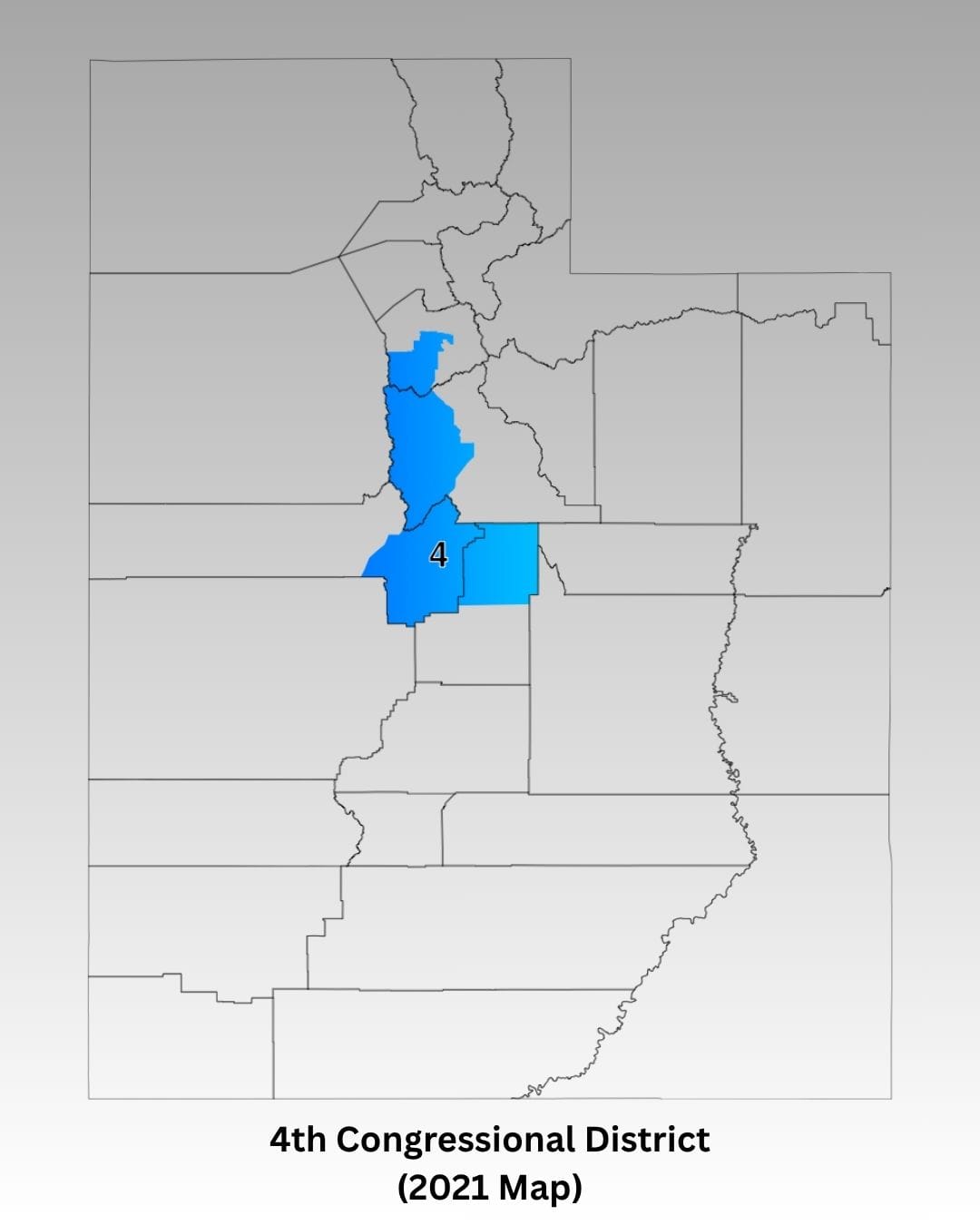
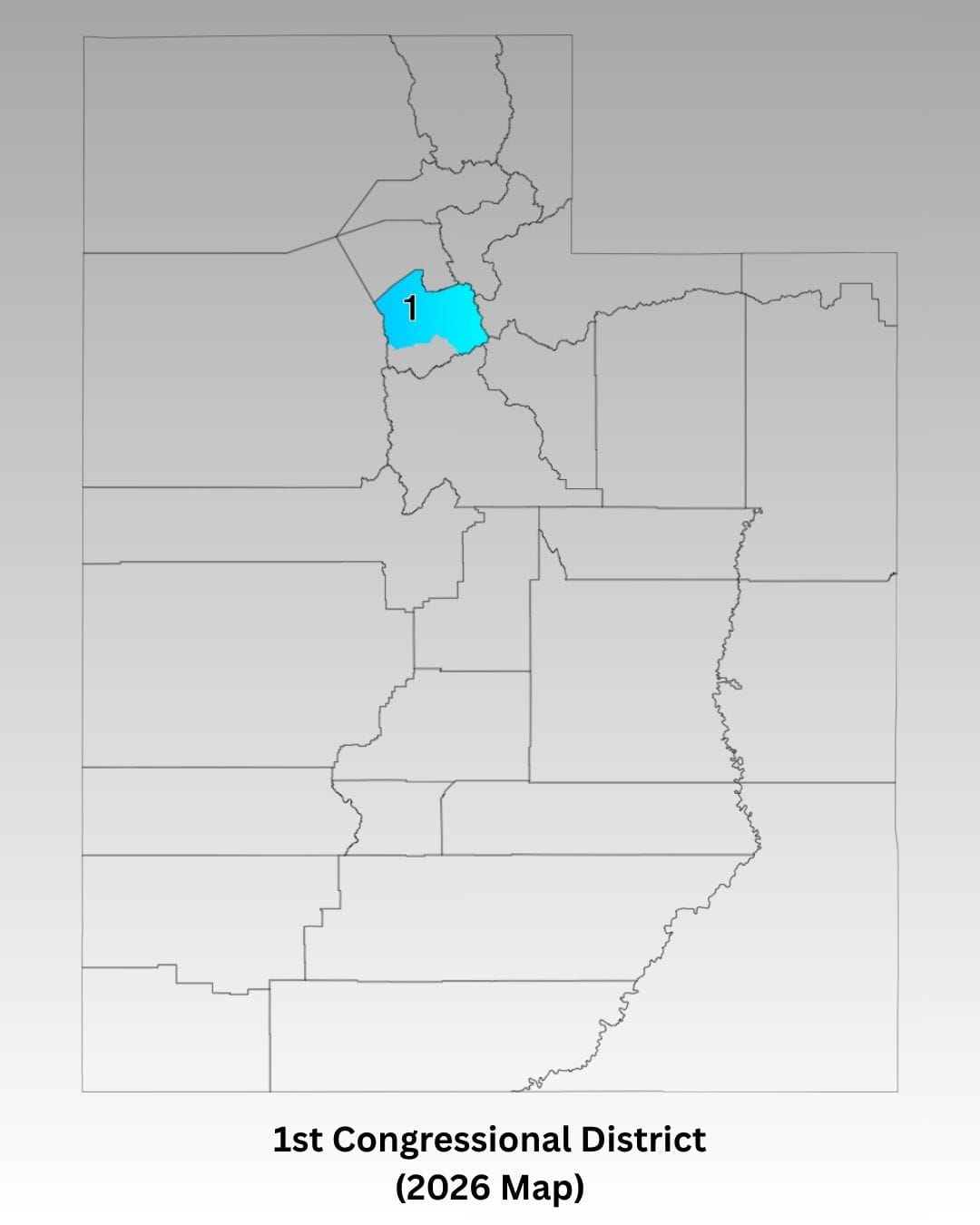
The largest chunk of orphaned voters sits in the new 1st District centered on Salt Lake County. Rep. Burgess Owens chose retirement over running in a Democratic-leaning seat. Just 37% of voters from the old 4th district migrated to the new 1st district.