Paywall? Not today.
This story's for everyone. But if you want more of this, subscribe and support independent journalism that answers to readers, not political agendas.
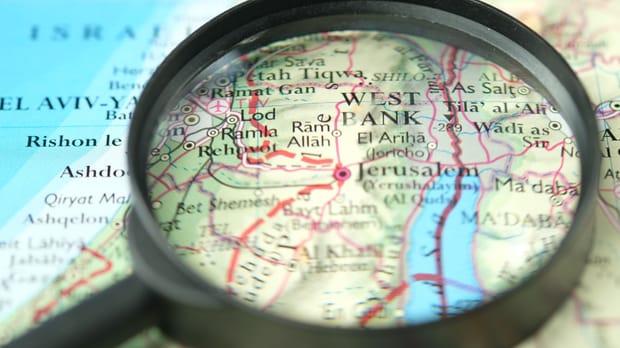
A Utah bill would make it state policy to ban “West Bank” in government materials and swap in the biblical terms “Judea” and “Samaria” for the territory east of Israel and west of the Jordan River.
HB435, from Rep. Karianne Lisonbee, R‑Clearfield, requires Utah to refer to land “restored to Israel from Jordan during the 1967 Six‑Day War” as Judea (south of Jerusalem) and Samaria (north of Jerusalem). It bars any state agency from using “West Bank” or spending state funds to produce materials that use it.
⏰ Tick Tock
12 days - Signature deadline for ballot initiative seeking to repeal Prop. 4 (2/15/2026)
31 days - The final day of the 2026 Utah Legislature (3/6/2026)
34 days - First day congressional candidates can file to run for the 2026 election. (3/9/2026)
42 days - Neighborhood caucus night. (3/17/2026)
67 days - Utah Forward Party nominating convention (4/11/2026)
81 days - Utah State Republican and Democratic State Party nominating conventions (4/25/2026)
140 days - Utah's 2026 primary election (6/23/2026)
273 days - 2026 midterm elections (11/3/2026)
1,008 days - 2028 presidential election (11/7/2028)
Lisonbee’s bill is mostly symbolic, but it plants Utah firmly on one side of a long‑running dispute over territory most foreign governments and many NGOs call occupied Palestinian territory. “Judea and Samaria” is a favored by the Israeli right and by opponents of a two‑state solution who argue for de facto annexation.
It’s not an original move. The bill tracks model legislation from ALEC; Arkansas passed a version in 2025, and copycat bills are pending in Oklahoma and Florida. Similar language has even surfaced in Congress.
Supporters say they’re correcting a “historical inaccuracy” and recognizing what they see as Israel’s “rightful claim” to the land here and here. Critics call it a state‑sanctioned attempt to erase Palestinian identity and terminology.