Paywall? Not today.
This story's unlocked for everyone. If you want more of this, subscribe and support independent journalism that doesn't answer to corporations or political agendas.
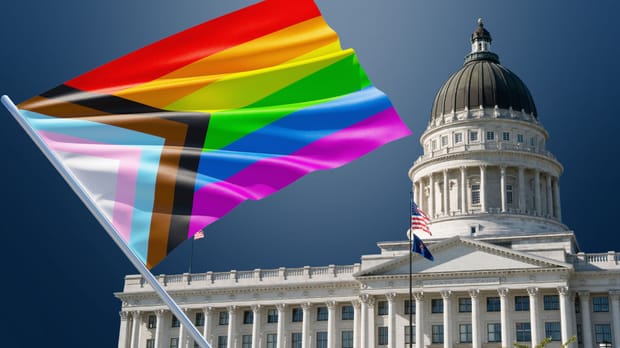
The “local control” crowd in the Utah Legislature loves home rule—right up until cities do something they don’t like. Now lawmakers are back in the Pride flag fight with a bill that effectively hands the legislature veto power over city flags, a direct shot at Salt Lake City.
⏰ Tick Tock
23 days - Signature deadline for ballot initiative seeking to repeal Prop. 4 (2/14/2026)
43 days - The final day of the 2026 Utah Legislature (3/6/2026)
46 days - First day congressional candidates can file to run for the 2026 election. (3/9/2026)
54 days - Neighborhood caucus night. (3/17/2026)
79 days - Utah Forward Party nominating convention (4/11/2026)
93 days - Utah State Republican and Democratic State Party nominating conventions (4/25/2026)
152 days - Utah's 2026 primary election (6/23/2026)
285 days - 2026 midterm elections (11/3/2026)
1,020 days - 2028 presidential election (11/7/2028)
Rep. Matt MacPherson, R-West Valley City, filed HB302, tightening rules on how cities and counties adopt flags. It limits each local government to one “official” flag and allows “ceremonial” or purpose-specific flags—but only in narrow, preapproved situations.
Every new official or ceremonial flag would be subject to review by the Legislature’s Rules Review and General Oversight Committee. A flag isn’t “official” until that committee signs off, giving lawmakers a de facto veto over what flies at city halls and public buildings.
The bill is a clear response to Salt Lake City’s workaround of last year’s HB77, which restricted which flags could fly in public classrooms and on government property: U.S. flag, Utah state flag, official local government flags, federally recognized tribal flags, and officially licensed college or university flags. In practice, Rep. Trevor Lee’s bill banned Pride flags on public property.
The bill is clearly retaliation for Salt Lake City exploiting a loophole in last year’s HB77, which listed which flags can be displayed in public classrooms and at government buildings. The list included the United States flag, the Utah state flag, official flags of Utah local governments, flags of federally recognized Native American tribes, and officially licensed college or university flags. In practice, Layton Republican Rep. Trevor Lee’s bill banned Pride flags on public property.
Lee said the quiet part out loud: “I think we have the votes in the Senate to make sure during Pride Month in Salt Lake City that you’re not able to fly Pride flags all over the place, which is something people are sick and tired of.”
Lee’s bill reportedly helped push the Sundance Film Festival to leave its longtime Utah home. The festival moves to Colorado next year.
After HB77 passed, Salt Lake City found a workaround: it added the city’s sego lily to Pride, transgender awareness, and Juneteenth flags and adopted them as “official.” Gov. Spencer Cox—who let HB77 become law without his signature—called the whole fight “dumb.”
HB302 closes that loophole by barring public entities from altering flags’ appearance.
Lee is co-chair of the very committee that would review any new city or county flags under HB302.
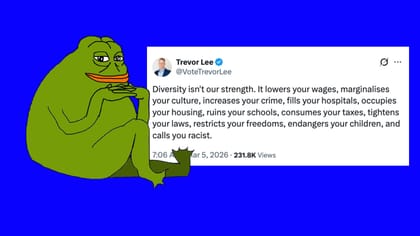
Last year he had a tantrum on social media after the NHL’s Utah Mammoth posted a Pride-themed logo. He later floated the idea of restricting Pride celebrations by private organizations that receive public funding. In 2024, Utah lawmakers approved nearly $1 billion in taxpayer funds for the Smith Entertainment Group. The funding will pay for renovations to the Delta Center and surrounding area.
HB302 also micromanages where approved flags can fly. Courthouses and public airports could only display flags from the approved list. Elsewhere—city halls, parks, other facilities—local governments could use their single official flag or a ceremonial flag, if the committee has blessed it.